Introducing our take on Nancy Drew! Thanks to artist Jamie Hahn for collaborating with me on this artwork and helping bring my take on Nancy Drew to life.
It’s summer 1959, she’s discovering she may be gay, and she’s solving a brutal small town murder in this horror mystery novella. And there’s a werewolf on the prowl…
Also, a shoutout to Grace, my editor, for letting us use her likeness to create the look of Nancy Drew.
This anonymous question was submitted to me on July 11, 2025. I answered it then, but I’d like to share my response to this question once more here. It’s a great question and I enjoyed answering it. If you’re an author reading this, answer the question in the comments. I’d love to hear what inspires your writing, too.
You can ask me questions with my Ask Nat form linked below and I’ll answer them on the blog.
Lots of things. In terms of inspiring my writing, I’m gonna answer this as both what informs my ideas and what gets me excited.
I tend to turn to a mixture of things for inspiration regarding ideas. History (especially ancient history), folklore, other media (like film and music), and real-life crimes and social issues tend to cause sparks to fly.
Some examples:
Sweet Sixteen Killer was born out of listening to “sweet sixteen” songs of the 1950s as an adult and realizing how gross they were,
my current work is a gothic horror piece set in Victorian era England that germinated as an homage to Universal monster and Hammer Horror films,
I have an upcoming Mercedes novel that’s inspired by an FBI report published during the Bush administration about white nationalists infiltrating the police to recruit members,
Jonah of Olympic has a subplot about an old dying Hollywood actress who has remained a closeted lesbian her whole life (for this I researched a number of Hollywood actresses from classic Hollywood who were closeted lesbian or bisexual — Marlene Dietrich, Greta Garbo, Katherine Hepburn, etc.),
and many of my works have hints to ancient or obscure folklore — two upcoming Mercedes Masterson stories, Aibell and The Book of Jude, delve into Irish folklore.
But also, movies and music. Movies inspire me a lot when it comes to writing. Some of you may not know, but I did a lot of indie film work in my early 20s. I love movies — especially horror (all kinds), action, noir, and some sci-fi. I think what I love most about films is how you can get sucked into a world for a very short amount of time and just be absorbed by its aesthetic and mood. Often times I’ll watch a collection of movies that have the vibe I want right before starting the first draft of writing. I’m a very visual person, so being able to absorb a lot of visuals before the writing process begins is important. I do this with Pinterest as well. I use Pinterest to create a mood board before I start writing. And then, there’s music. I can’t overstate its influence in my writing. I build playlists for my novels. My longest one to date is for Jonah of Olympic, which is over 10 hours long. I explore music I know, but also discover a lot of new music. I can often sit with a song on repeat while my mind creates a scene or character. It’s a very meditative process.
The first draft of my Nancy Drew horror mystery novella cover art work arrived yesterday. I’ve made notes and sent them back. Y’all this is so exciting. It looks fabulous and will continue to improve. Can’t wait to share it with y’all in the near future.
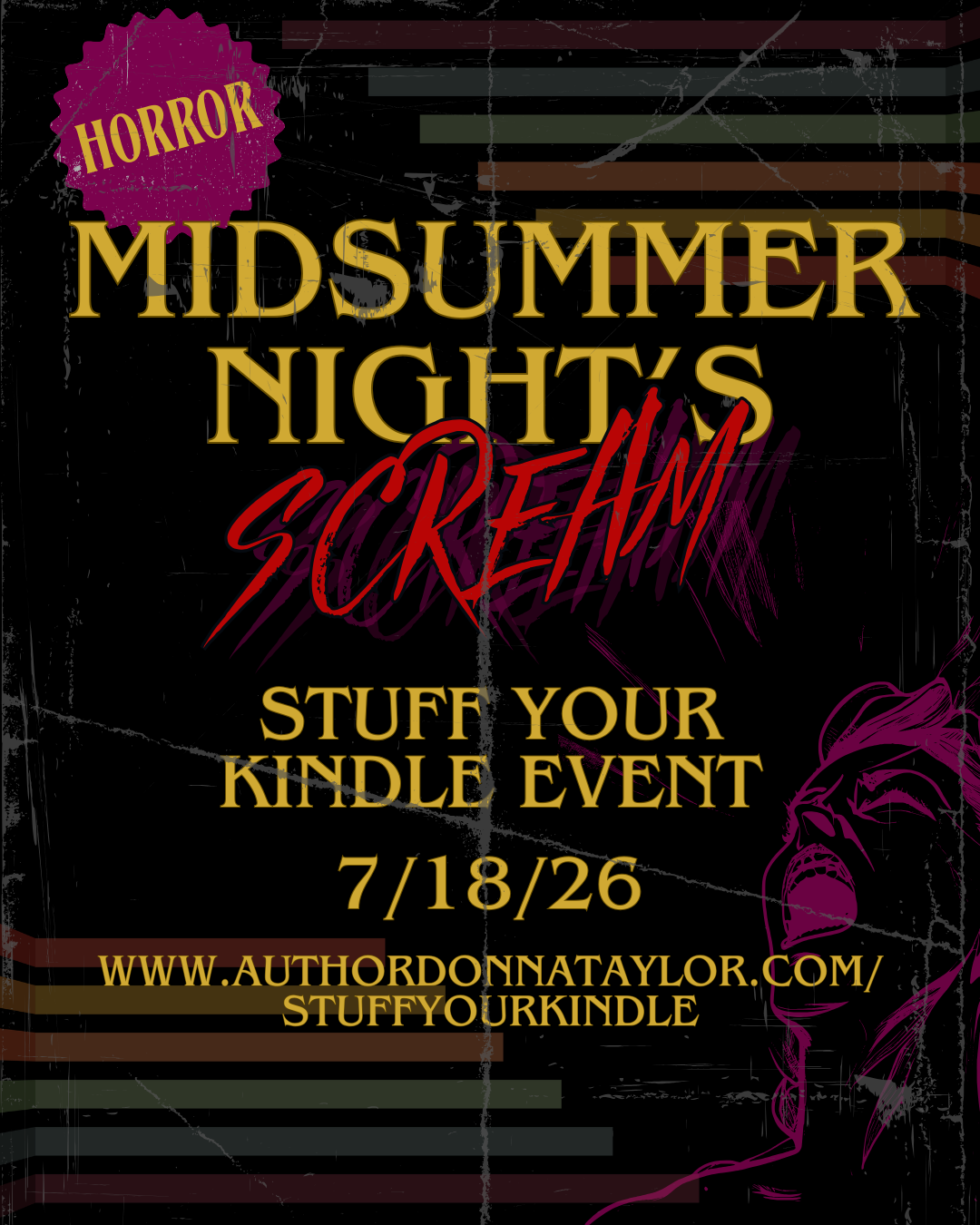
I’ll be participating in the Midsummer Night’s Scream book event by giving away free ebook copies of my short queer YA comedy sci-fi horror story called “Blood Frequnecy.” Mark your calendars for July 18! 🌈 👽
Other authors will be involved in this event as well across Threads and Instagram either with discounted works or free ones.
It can be hard to keep the writing going sometimes. Sometimes we get imposter syndrome, sometimes we lack confidence, or take a hit in our confidence from external forces. Sometimes it just all feels out of reach, like maybe we just don’t have the right stuff.
But I say, nah, believe in your own self. Believe in your stories. Believe in your characters and bring them to life for us. You have such wonderous stories to share, and your voice may be just the one some kid who feels unseen needs to read.
So keep on writing. Keep on thinking. Keep on imagining.
Two days ago, I met online with horror author and poet Andrew K. Clark to talk writing, Christian fundamentalism, and a bit about his home Asheville, North Carolina — his body of work takes place in his backyard, Appalachia.
Like the previous interview with horror author Lana Casiello, the conversation went long and covered a lot of ground. Clark and I both were raised in Christian fundamentalism, though different flavors as he came up in a Baptist church and I came up in a Church of Christ. Much of his horror writing does delve into religious horror, a direct response to his own experiences.
And of course, it’s hard if not impossible to not draw comparisons between our current Christian nationalism state when discussing Christian fundamentalism. They are all intertwined.
For example, during the last presidential election, I opened up the Heritage Foundation plans for a second Trump presidency and as I read through it, it was clear to me that they were taking many of those fundamentalist beliefs and codifying them into politics. Which, if you’re unfamiliar with fundamentalist ideologies, you might have missed some of it or may not realize how far they plan to go.
All that to say, I think you may find my interview with Clark intriguing. I’ll be working on editing it down into episodes over the next month or two. In the meantime, you can pre-order his upcoming horror novel Hollow Folk which is set to release September 29th.
📚 Indie authors: people will complain about you and call you too political, and beg you to stick to writing fiction. But if we don’t speak up and push back, our stories will be banned from libraries, book stores, and online. It’s already happening.
Literally if I don’t get political there’s a real chance I won’t be able to write stories anymore because it’ll be illegal for me to do so.
So I say: write like hell and yell like hell. Because our stories deserve to be read.
In the second Confabulation episode with horror author Lana Casiello, we talk some more about Hawaiian colonialism and the plantations in Hawaii. We also delve into Casiello’s stories and writing.
Be sure to subscribe to my blog to follow along and get the latest updates on Confabulation episodes. Each episode is also uploaded to my Instagram and Facebook accounts, if you want to follow along there as well.
In the third story of my Mercedes Masterson Detective Stories series, Jonah of Olympic, there is a character named Aaron. He’s not a large role, but an important one. He helps move the plot along. And sometimes smaller roles are good for that, I find. It sort of makes them unsuspecting or as if they just can’t help but center themselves in a story that’s not about them. We’ve all met one of those folks.
But the character is fascinating to me for a number of reasons, one reason in particular is extra interesting to me personally, and it’s something I hadn’t talked about yet and I’m not sure if readers have picked up on it — though I’m not sure how some could have. But to this end, let’s talk about Aaron…
Aaron, the character
In Jonah of Olympic there is a church called Holy Ghost Fire Temple, and Aaron is a young man who is a member of this church. The church leadership hierarchy has an evangelist at the top, and then his right-hand men, the apostles, right below him. Aaron manages a motel in the small town and is zealous and eager for the preacher’s affections. He wants to be an apostle and be counted among the most faithful.
Several readers have confided in me that he is the type of character they’ve known before, especially those of us who used to be or maybe still are in a Christian church. There’s always those young men that are way too zealous and desperately trying to rise through the ranks and always looking for affirmation from church leaders who they adore with way too much adoration. This is who Aaron is.
I try to avoid saying who a character is in terms of good or bad, or what have you, when it’s a character I wrote, because readers may differ on that and it’s fine. What I will say, is I don’t necessarily view him or people like him as bad people, but they can be dangerous if things don’t quite go the way their faith leads them to believe it should. Their faith is super strong, but to a fault in that it blinds them to reason, and that can be dangerous.
In the story, Aaron is a chosen name by himself. We never learn his previous name. All the members who join the church have to pick a biblical name as they begin their new lives. Aaron is the brother of Moses in the bible. He is regarded as a good public speaker whom God suggests Moses use when he tells God he’s no good at public speaking while standing before the burning bush. My character choosing Aaron as his new name is a projection of his ambitions — he wants to rise through the ranks and stand at the side of their church leader, the preacher, and be his voice — just as Aaron was a voice for Moses.
Aaron was a fascinating character to write. And diving into him each time I got to write him was a fun exercise in psychology and spirituality.
But, there’s something else about Aaron that’s interesting to me and I may have subconsciously explored him in ways I’m not even sure of yet.
I hate the name Aaron
My middle name is Aaron. I seldom use the name or mention this fact, because it’s always bugged me ever since I was a kid. I appreciated the meaning of the choice, my parents naming me after Aaron of the bible. But there was just always something off-putting to me about that name. To this day, I’m not sure what it is for sure. But when I look at that name, I do not see my name. I see something else and it bugs me that it’s supposedly my name. So I’ve mostly learned to ignore the existence of Aaron between my first and last names.
I do recall vague memories of looking at the name when I was first learning to spell it and just being so annoyed by how it looked on paper in my sloppy kid’s handwriting. The two As back-to-back also annoyed me. I recall thinking about how the name verbally was a name that could be either masculine or feminine, but on paper with those two As, it was clearly masculine. And I do remember that bugging me. I can’t say why, though it may have been an early indication of me being genderqueer. The fact the name is gender neutral audibly, but when you spell it Aaron on paper it is indisputably masculine. Erin, of course, being the feminine spelling. And my spelling of the name was the masculine variant — Aaron.
It’s so fascinating to think about how annoyed I was seeing that name when I wrote it down the first few times. I was instantly appalled by it. And as a kid, the only thing that tended to appall me instantly was seeing injustice. Like, when some kids bullied another kid. That was the quickest way to piss me off as a kid.
But writing Aaron on paper for the first time, and knowing it was my name, that pissed me off so hard.
But what does this have to do with my fictional character Aaron? I don’t know. When I was writing the character, I wasn’t focused on the name being my middle name. You have to keep in mind, when I write that name it doesn’t even register as my name. I was focused on writing an interesting character who saw himself as the potential metaphorical brother of Moses. A gifted speaker and leader alongside his spiritual leader who he adored. I wasn’t thinking about myself at all while writing the character.
Now though? Now I’m wondering. Was I subconsciously getting some deep-rooted feelings off my chest about the name Aaron? It looks like I’m going to have to re-read my own story and decipher the hell out of that character, because I may have been writing about myself, too.
Conclusion
I don’t think I’ve ever talked this much about my feelings concerning the name Aaron with anyone. So this is like therapy in the open. It’s also worth noting that I only hate the name Aaron as it pertains to me. If your name is Aaron, that’s ok, I forgive you. I mean, it doesn’t bother me. It’s just this notion that the name is mine when it really doesn’t feel right at all.
If you’ve read Jonah of Olympic, what did you think of Aaron? Give me your literary critique of Aaron, the character, in the comments. If you’ve not read the book yet, you can find it on the publications page.
What about you? Do you have a middle name that irks you? Do you love your middle name? What do you think my kid brain was doing when it saw the name Aaron on paper? Sound off.
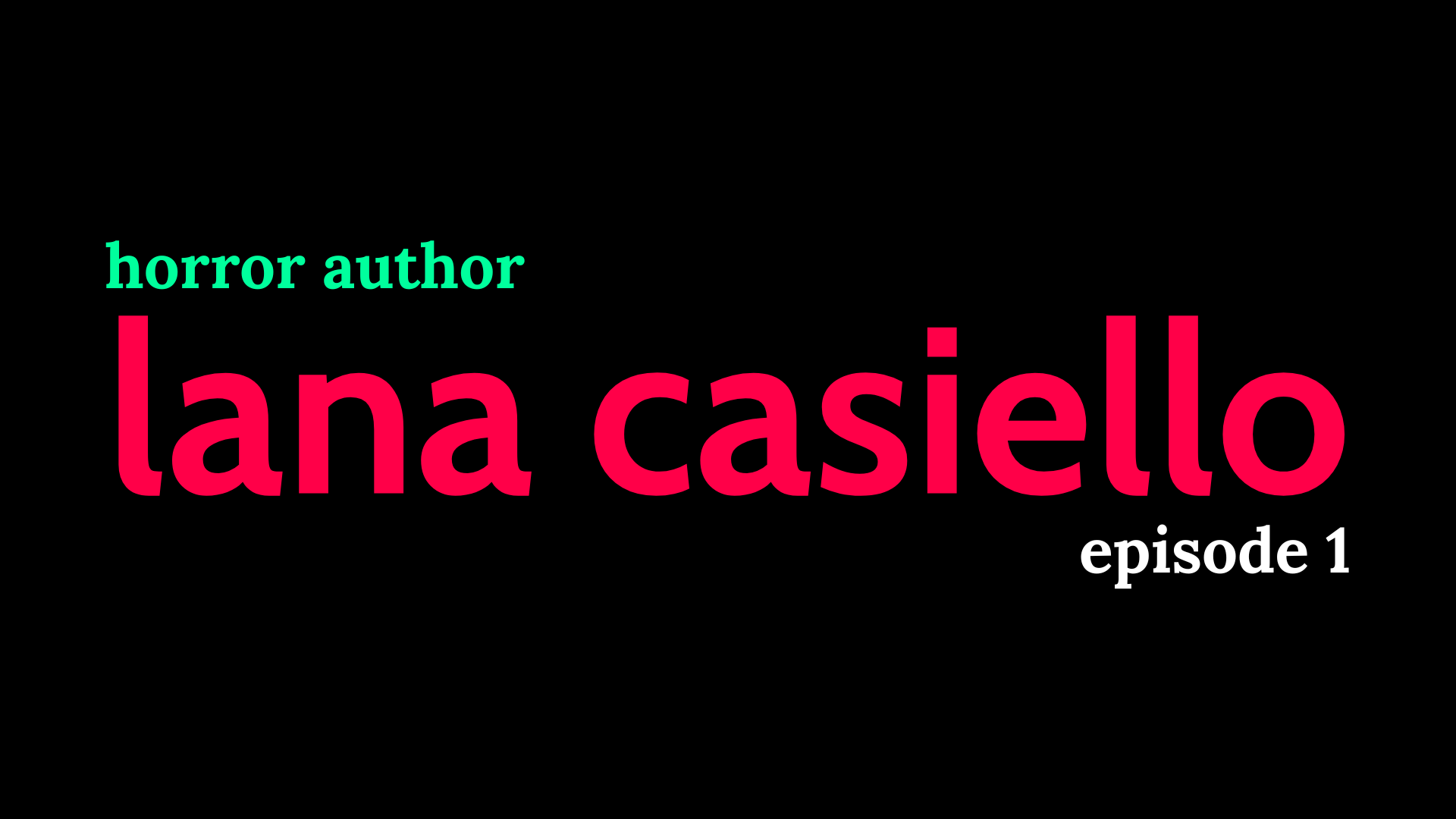
Here is the first of three episodes where I interviewed horror author Lana Casiello. Originally uploaded in full to YouTube, I’ve decided to bring my writing world interview series, Confabulation, to other places. I’ve also decided I’ll be breaking these interviews into episodes moving forward.
In this first episode, Lana and I discuss colonialism in Hawaii and her Hawaiian heritage. More to come in the next episodes, so stay tuned. Follow the blog if you like this Confabulation series. I interview authors, publishers, and other writerly types.